
Stadiums & Venues
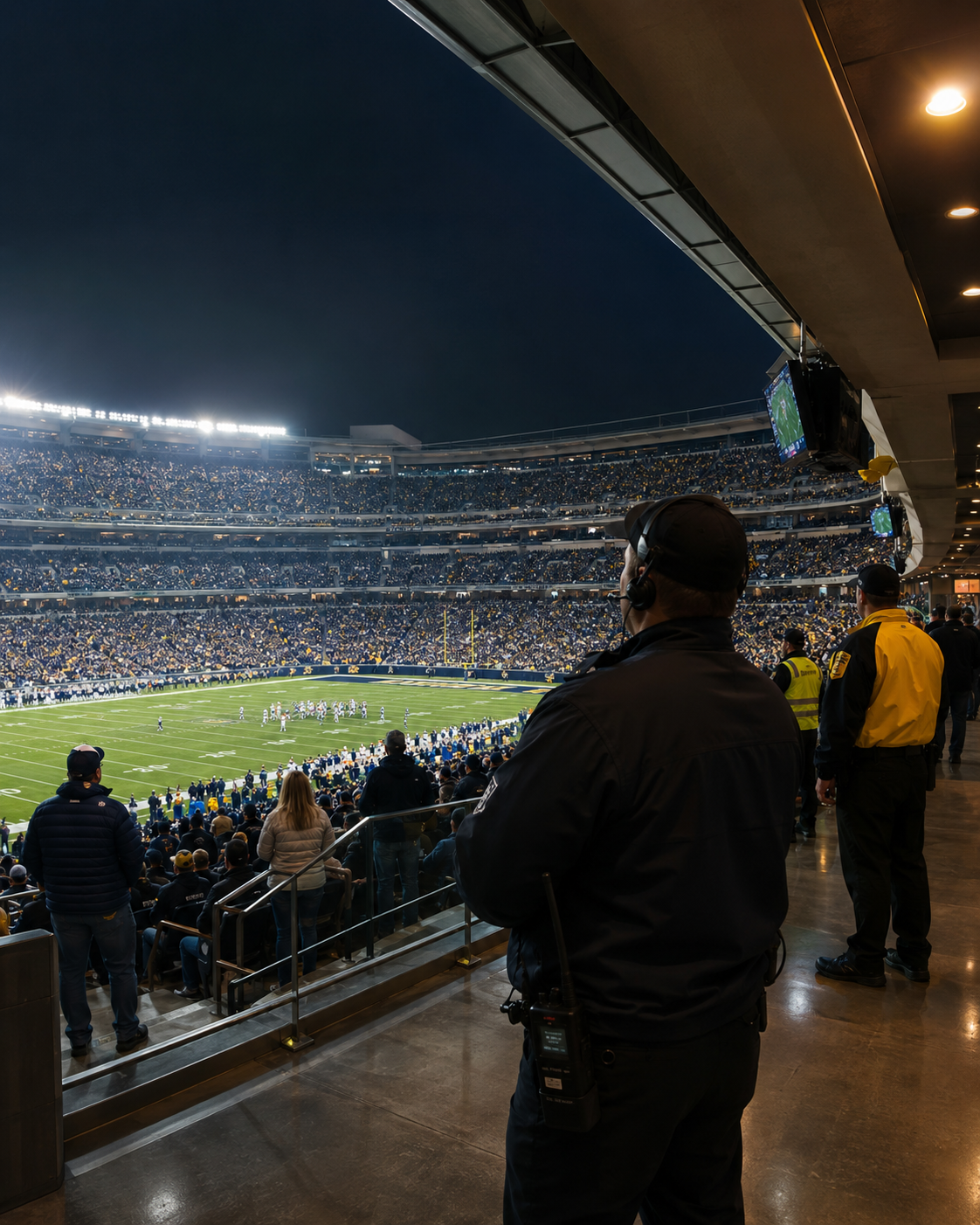
Wireless Network Solutions for Stadiums and Venues
Stadiums, arenas, and entertainment venues need wireless infrastructure that performs when demand is highest. Fans rely on mobile connectivity for tickets, ordering, video, messaging, and social sharing. Venue teams rely on wireless networks for point-of-sale systems, security operations, staff communications, digital signage, access control, and first responder coverage. CTS designs, deploys, and manages the in-building wireless systems that keep fans connected, operations running, and venues safe from gates open through post-event operations.
6 of the Last 7 Super Bowl Venues | Carrier-Trusted Partner | Multi-Technology. Single Partner.

Carrier-Trusted Execution
Major wireless carriers have selected CTS to deliver in-venue DAS for 6 of the last 7 Super Bowls, the highest-stakes wireless deployments in sports.

National Venue Footprint
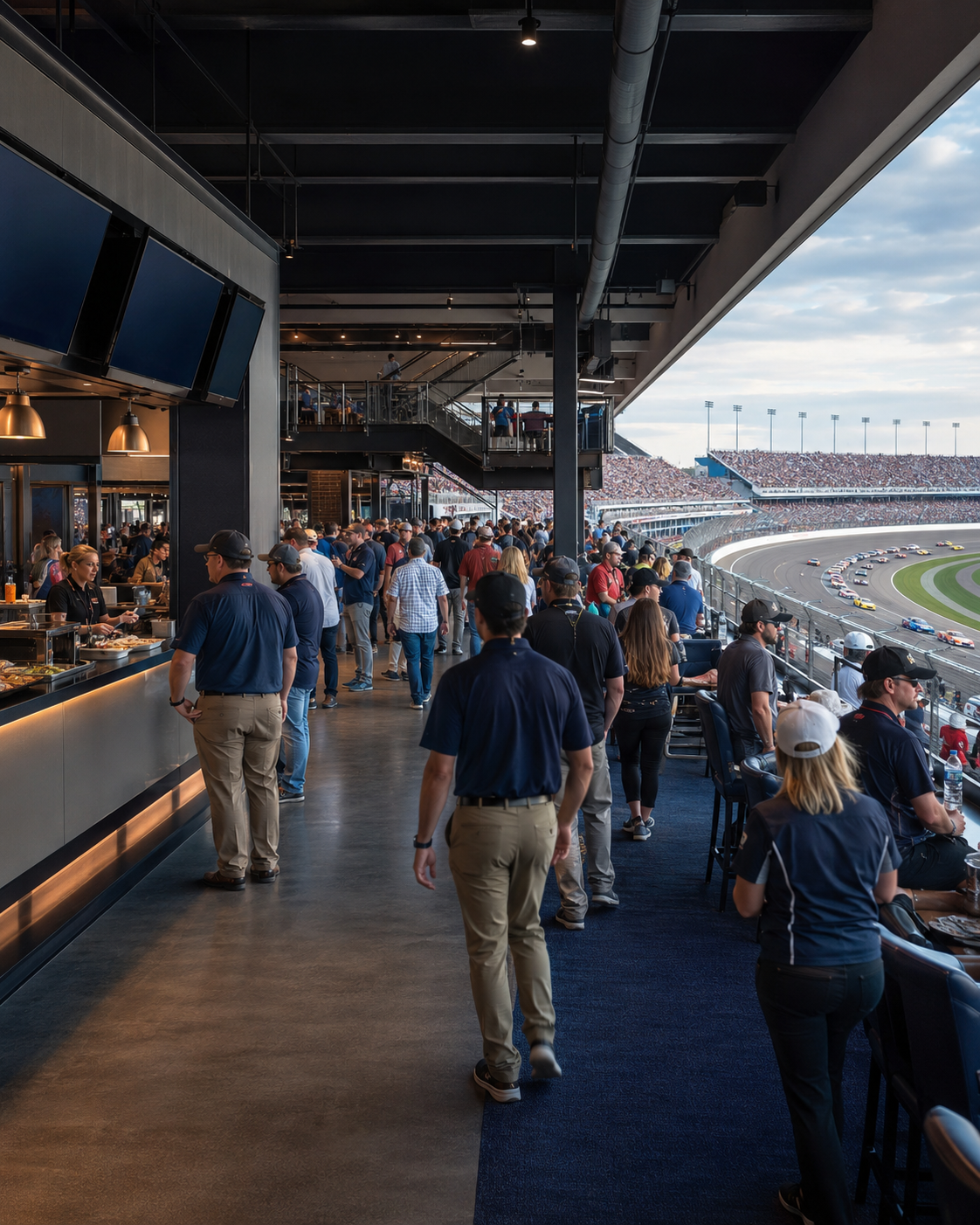
CTS has deployed wireless infrastructure across NFL stadiums, MLB ballparks, NBA arenas, NCAA venues, motor speedways, and multi-use entertainment facilities.

Full-Stack Wireless Expertise
DAS, Public Safety DAS, Private 5G, Wi-Fi, and Optical LAN are engineered together for the density, coverage, compliance, and operational needs of major venues.

Managed for the Long Game
CTS MMRD provides 24/7 monitoring, preventive maintenance, repair coordination, and field dispatch to help venue wireless systems perform event after event.
Why Connectivity Is Now Core Infrastructure for Stadiums and Venues
Modern sports and entertainment venues are among the most demanding wireless environments in the world. A sold-out stadium or arena can concentrate tens of thousands of connected devices in one structure, with fans streaming video, using mobile ticketing, placing food orders, accessing live stats, and sharing content at the same time. Venue operators also depend on wireless infrastructure to support point-of-sale systems, digital signage, IP cameras, access control, staff devices, building systems, and event operations.
Many venue wireless systems were designed for a different era. Legacy DAS may support basic coverage but fail under today’s high-capacity data loads. Wi-Fi networks can become congested when fan demand spikes. Operational systems can lose performance when they share capacity with public traffic. Public safety radio coverage can fail in tunnels, concourses, suites, below-grade areas, and back-of-house spaces. When connectivity fails during a live event, the impact reaches fan experience, revenue, security, emergency response, and brand reputation.
Distributed Antenna Systems (DAS) for Stadiums and Venues
Large venues cannot rely on outdoor macro towers to deliver strong cellular service into every seat, concourse, suite, tunnel, restroom, club area, and back-of-house space. A stadium-grade Distributed Antenna System brings multi-carrier 5G and LTE coverage into the venue through a network of antennas connected to carrier signal sources and centralized headend equipment.
CTS designs and deploys DAS for high-density sports and entertainment environments where capacity, carrier coordination, and performance matter. Our neutral host DAS approach supports all Tier 1 carriers on shared infrastructure, helping venue owners reduce complexity while giving fans reliable cellular coverage regardless of their mobile provider.
CTS has delivered in-venue DAS for major stadiums, arenas, and sports properties nationwide, including carrier-selected deployments for 6 of the last 7 Super Bowls.
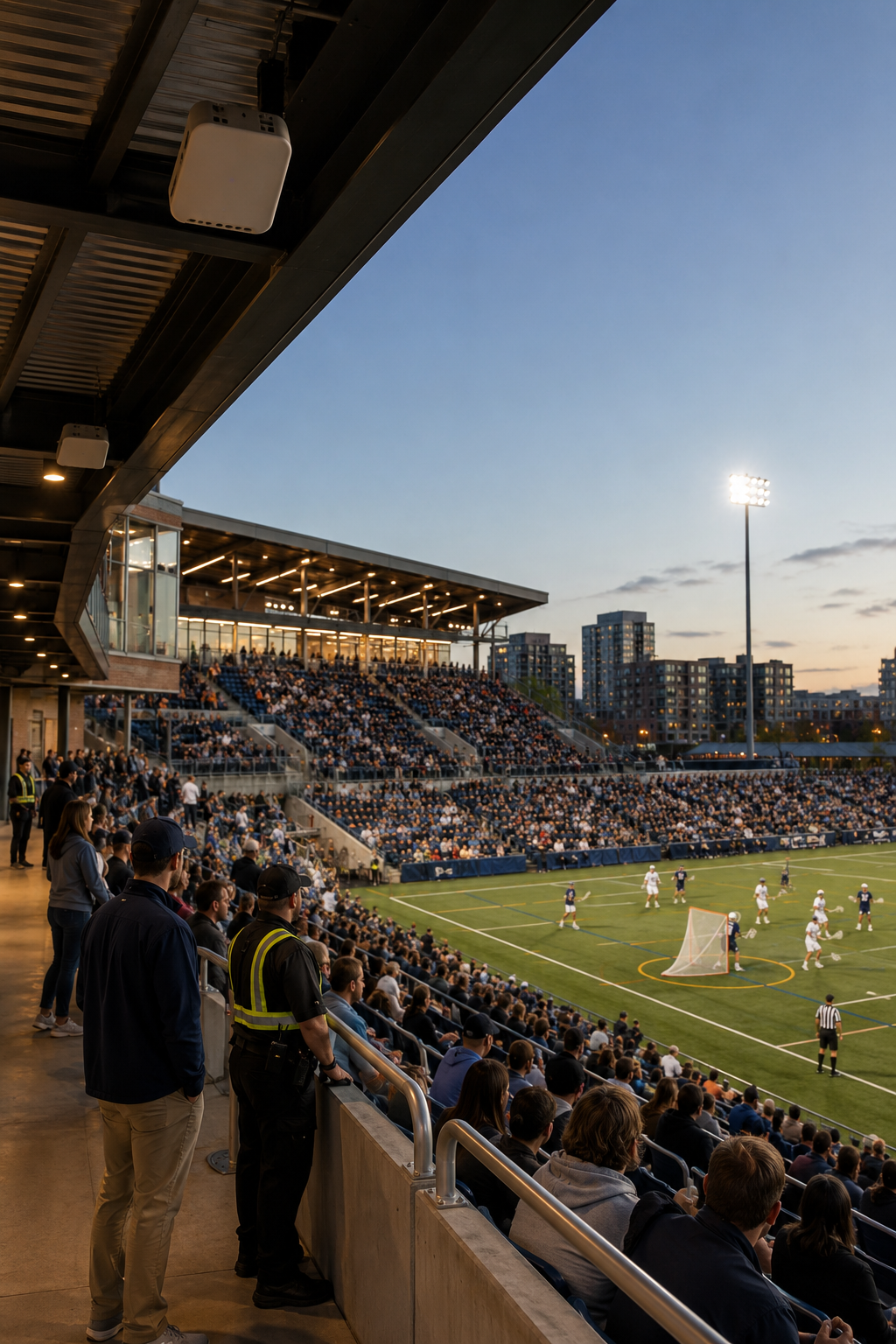
Public Safety DAS (ERRCS) for First Responder Coverage
Public Safety DAS, also known as an Emergency Responder Radio Coverage System, helps ensure that fire, police, EMS, and security teams can communicate throughout a venue during an emergency. In stadiums, arenas, convention centers, and entertainment complexes, thick concrete, steel, below-grade spaces, multi-level construction, and large footprints can block public safety radio signals.
CTS designs, deploys, tests, and maintains code-compliant Public Safety DAS systems for venues subject to NFPA 72, IFC 510, and local AHJ requirements. These systems are built to support first responder communication across field level, seating bowls, concourses, suites, service corridors, tunnels, parking areas, and back-of-house spaces.
CTS also supports system audits, remediation, monitoring, and maintenance through MMRD, helping venues maintain compliance after renovations, expansions, event changes, and AHJ re-inspections.
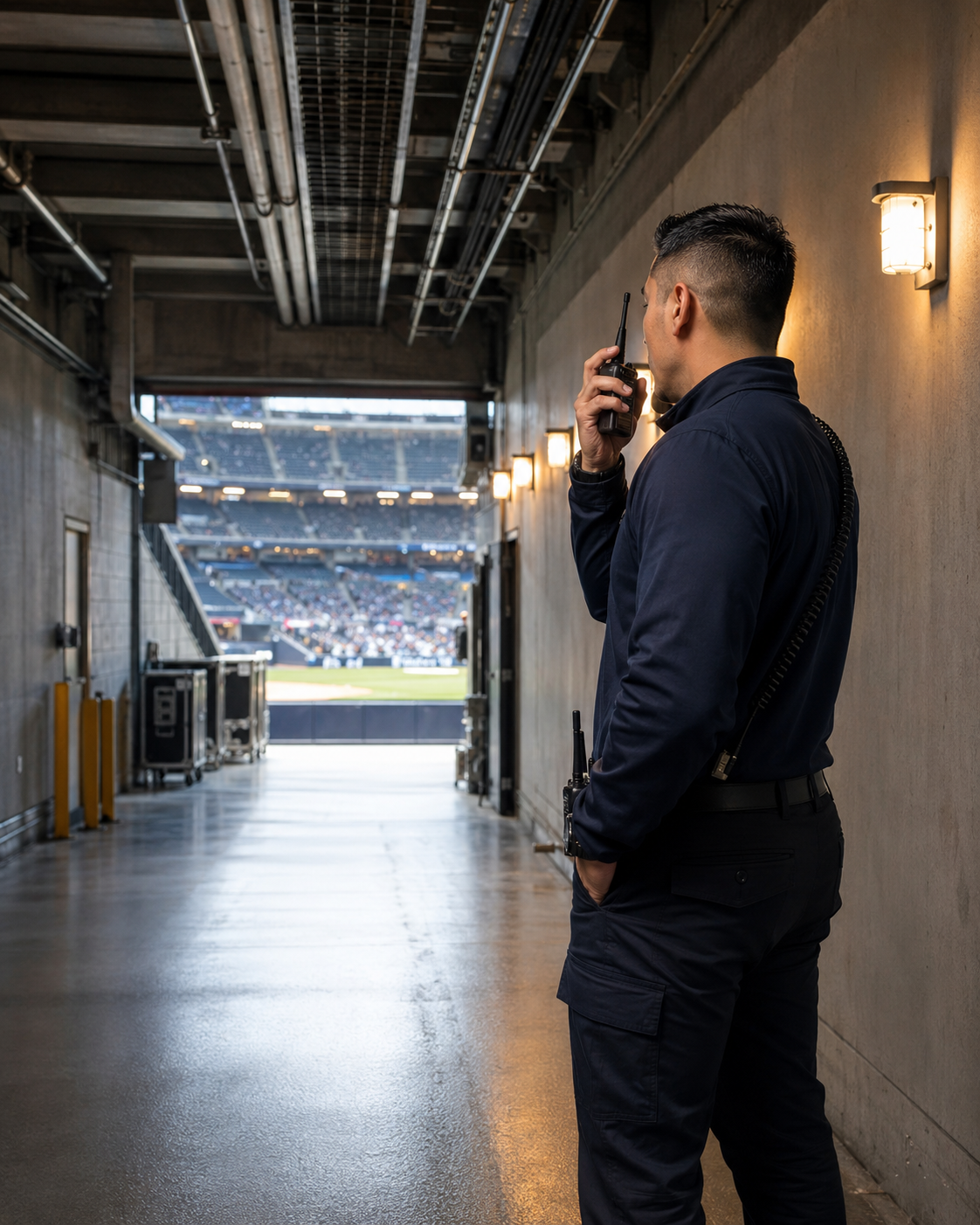
Private Cellular Networks for Venue and Team Operations
DAS supports the public carrier experience for fans. Venue operators, teams, and event staff also need a dedicated wireless layer for operational systems that cannot depend on congested public cellular or guest Wi-Fi. Private 5G and LTE networks give stadiums, arenas, and sports organizations controlled wireless infrastructure for mission-critical applications across both venue operations and team operations.
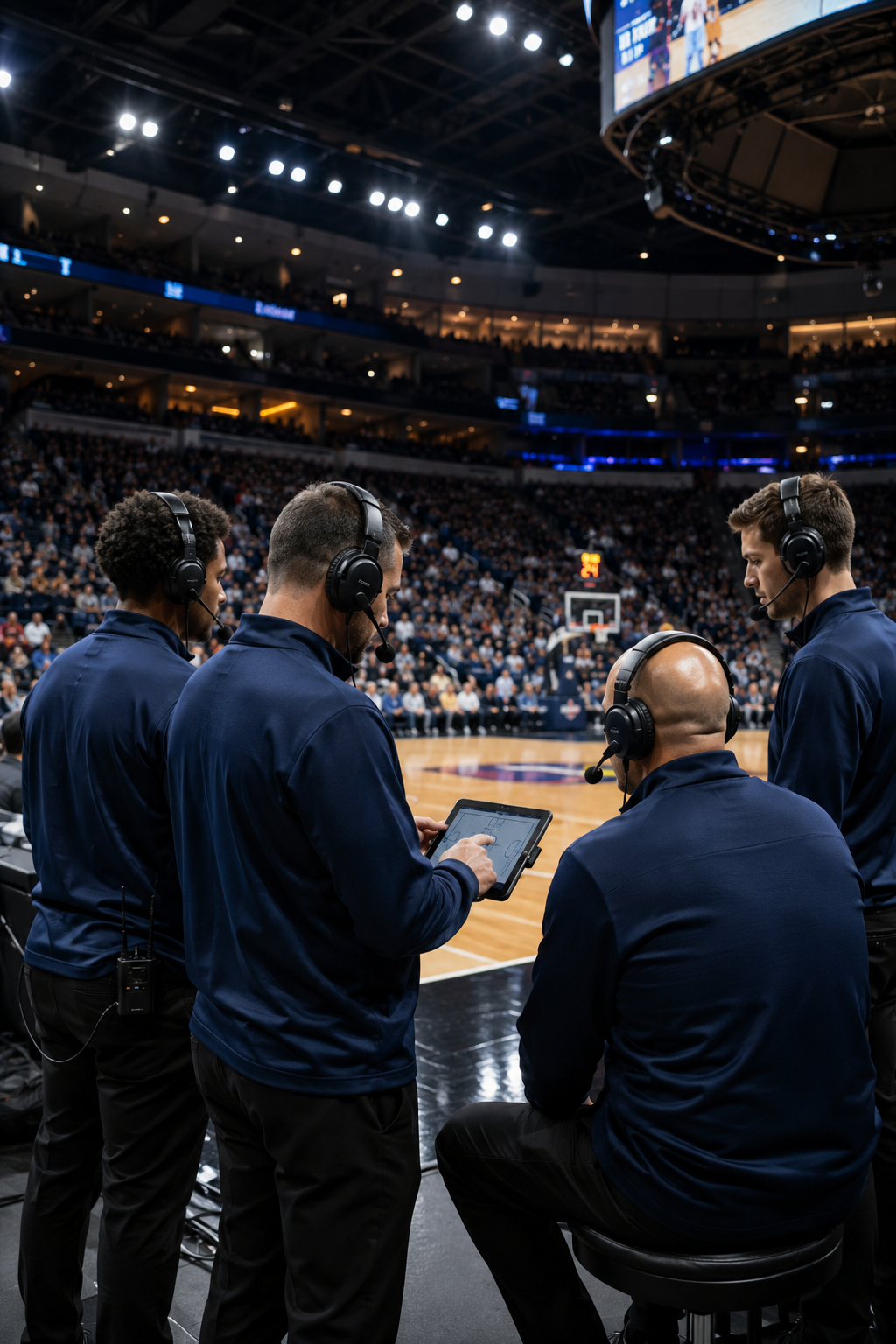
Private cellular can support mobile point-of-sale, cashless concessions, ticket scanning, access control, IP cameras, IoT sensors, digital signage, building systems, and staff communications. It can also support coaches, sideline personnel, training staff, equipment teams, replay coordinators, and other on-field and off-field personnel who rely on headsets, tablets, connected devices, and real-time data during games and events. Because private networks operate separately from public carrier traffic, they can provide dedicated capacity, stronger access control, lower latency, and more predictable performance when the venue is at peak demand.
CTS designs private cellular networks around venue workflows, team operations, security requirements, device needs, and event-day use cases. Networks can be integrated with existing venue systems and managed through CTS MMRD for long-term performance.
Wi-Fi for Fan Engagement and Venue Operations
High-density Wi-Fi remains a critical part of the stadium and venue connectivity strategy. Fans use venue Wi-Fi for mobile tickets, in-seat ordering, live stats, social sharing, streaming, and app-based engagement. Staff teams use Wi-Fi for operations, communications, devices, and administrative workflows.
CTS designs and deploys high-density Wi-Fi networks for the physical and RF demands of stadiums, arenas, and entertainment venues. Proper design may include under-seat access points, under-balcony placement, directional antennas, traffic segmentation, capacity planning, and secure network separation between guest and operational use.
Wi-Fi works best when it is part of an integrated wireless architecture that also includes DAS, Private 5G, Public Safety DAS, and the wired backbone needed to support them.
Optical LAN for Smart Venue Infrastructure
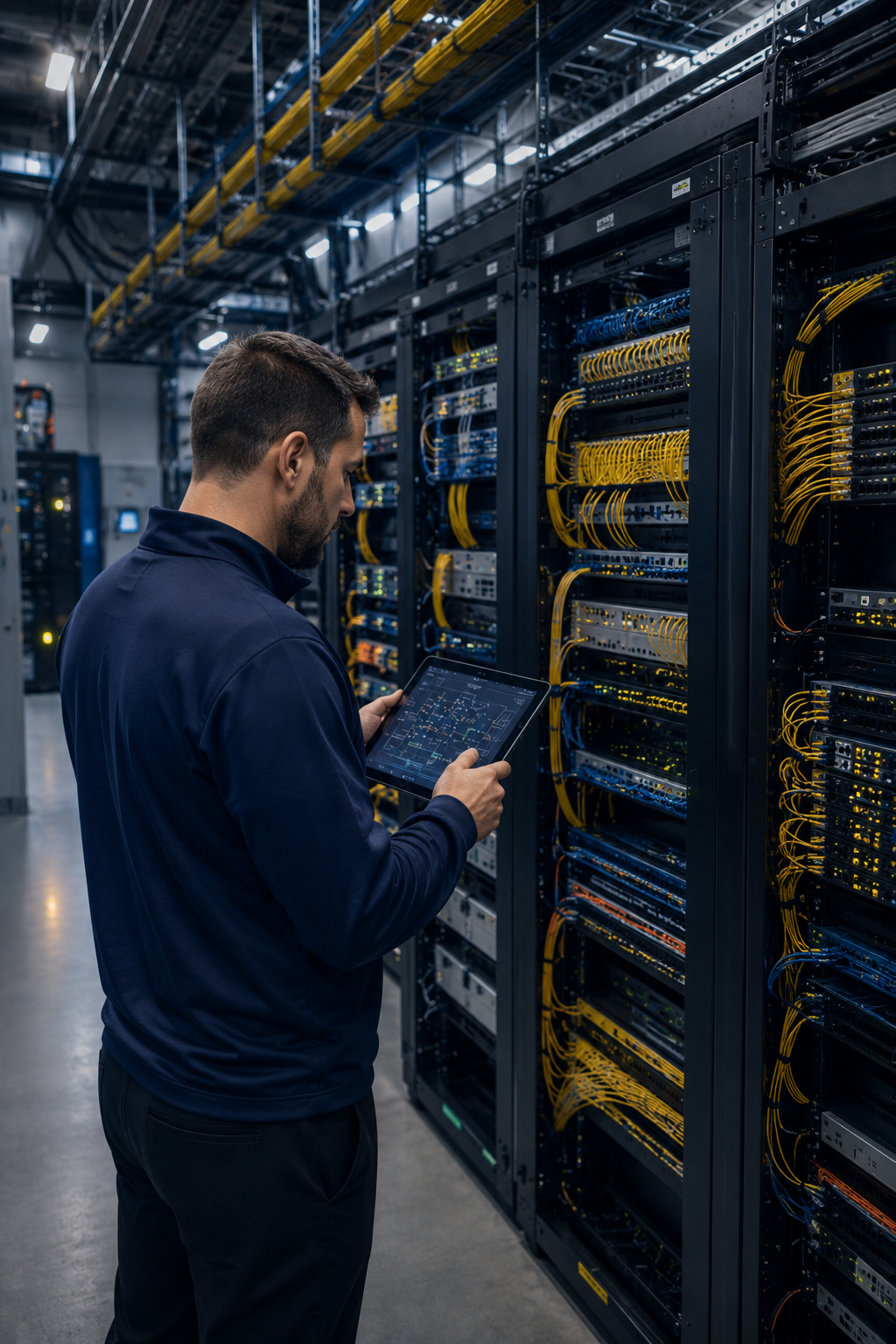
Every wireless system depends on the wired infrastructure behind it. Stadiums and venues need a network foundation that can connect access points, antennas, cameras, signage, point-of-sale systems, security systems, servers, switches, sensors, and building systems across large, complex footprints.
CTS Optical LAN solutions use fiber-based and software-defined architecture to simplify the network backbone. Compared with traditional copper LAN designs, Optical LAN can reduce equipment footprint, lower power requirements, simplify management, and improve scalability as venues add more connected systems.
For stadiums, arenas, convention centers, and entertainment districts, Optical LAN provides a practical foundation for smart venue operations, high-density Wi-Fi, private cellular, security systems, digital signage, and long-term expansion.
Solving the Toughest Wireless Challenges in Stadiums and Venues
Stadiums and venues face wireless challenges that change by location, event type, crowd size, and operational need. A sold-out game, concert, convention, or championship event can put pressure on fan connectivity, revenue systems, security workflows, first responder communications, and team operations at the same time. CTS helps venue owners, operators, carriers, and teams plan integrated wireless infrastructure that supports the full event environment, from the seating bowl and concourses to back-of-house spaces, entry gates, field-level operations, and public safety zones.
Keeping Fans Connected at Peak Capacity
The hardest wireless challenge in a major venue is density. Tens of thousands of people may connect at the same time, often in concentrated seating sections, concourses, entry areas, clubs, and suites. CTS addresses this through RF modeling, antenna placement, sector planning, network segmentation, and capacity design across DAS, Wi-Fi, and Private 5G.
Enabling Faster, Safer Entry and Crowd Flow
Mobile ticketing, access control, screening systems, staff devices, and crowd management tools depend on reliable connectivity at the exact moment demand spikes. CTS designs coverage and capacity for gates, entry plazas, concourses, and security checkpoints so venue teams can reduce bottlenecks and keep event operations moving.
Supporting Team Operations During Live Events
Team operations also depend on reliable wireless connectivity before, during, and after the event. Coaches, sideline personnel, replay coordinators, training staff, equipment teams, and off-field operations teams rely on headsets, tablets, connected devices, and real-time data to communicate and make decisions under time-sensitive conditions. CTS private cellular networks can provide a dedicated wireless layer for these use cases, helping teams maintain secure, predictable connectivity even when fan networks are under peak demand.
Supporting First Responder Communications
Large events create public safety risk, and first responders need reliable radio coverage throughout the entire venue. CTS Public Safety DAS solutions support emergency communication in areas where building materials and venue layouts can block radio signals, including tunnels, locker room corridors, service spaces, upper levels, and below-grade areas.
Running Revenue-Generating Operations on Reliable Networks
Cashless concessions, mobile ordering, merchandise sales, digital signage, and premium experience platforms all depend on wireless performance. CTS private cellular and Wi-Fi solutions help protect operational systems from public network congestion, supporting faster transactions, shorter lines, and more reliable service during peak event periods.
Managing a Multi-Technology Environment as One System
Most venues operate DAS, Wi-Fi, Public Safety DAS, private networks, and wired infrastructure as separate systems. That creates vendor complexity, monitoring gaps, and operational risk. CTS brings these technologies into one integrated strategy with a single partner responsible for design, deployment, monitoring, maintenance, repair, and dispatch.
Maintaining Performance Event After Event
Wireless environments change over time. Components fail, configurations drift, renovations alter RF conditions, and new operational systems increase traffic. CTS MMRD provides 24/7 NOC monitoring, preventive maintenance, remote diagnostics, repair coordination, and field dispatch so venues can identify and address issues before they affect live events.
REAL-WORLD RESULTS
Proven Performance When It Matters Most
Carrier-Trusted for 6 of the Last 7 Super Bowls
The Super Bowl is one of the most demanding wireless environments in sports. It brings tens of thousands of fans, high device density, major carrier scrutiny, broadcast attention, media operations, public safety requirements, and no tolerance for network failure.
CTS has been selected by major wireless carriers to deliver in-venue DAS infrastructure for 6 of the last 7 Super Bowls. That record reflects carrier trust, technical execution, project coordination, and the ability to deliver under the highest operational pressure.
Key Outcomes
Multi-carrier DAS performance delivered for peak-load stadium environmentsTier 1 carrier trust for the most visible wireless deployment in U.S. sportsOn-time, on-spec execution in venues with no room for event-day failure
Supporting Stadiums and Venues Across the United States
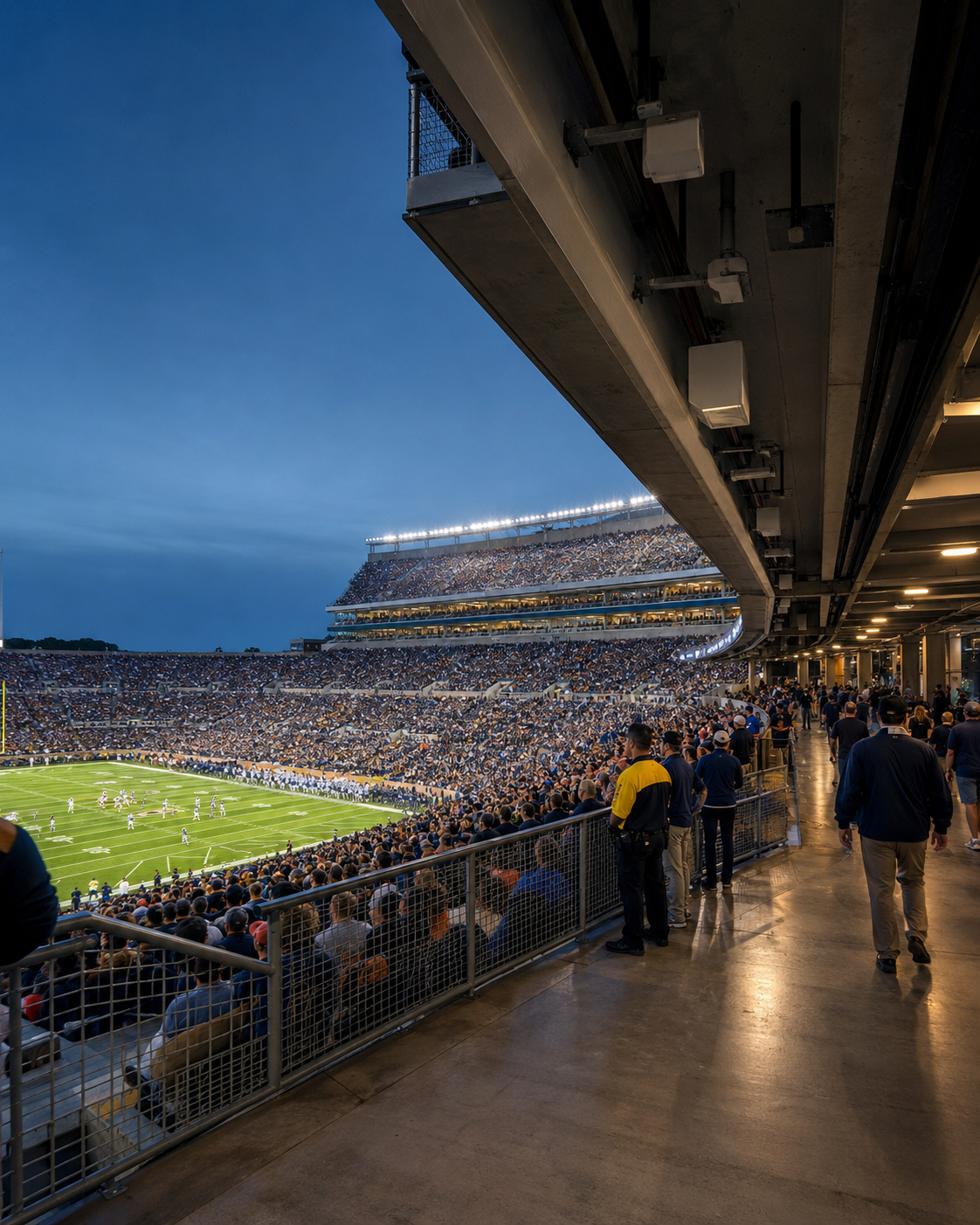
CTS has delivered wireless infrastructure at major sports and entertainment venues across the country. This experience spans professional stadiums, college arenas, motor speedways, convention environments, performing arts venues, and multi-use entertainment facilities.
Professional Sports Venues
Petco Park, San Diego, CA (MLB)
Staples Center, Los Angeles, CA (NBA)
AT&T Center, San Antonio, TX (NBA)
Minute Maid Park
Amway Center, Orlando, FL (NBA)
SunLife Stadium, Miami, FL (NFL)
College and University Venues
Ohio Stadium, Ohio State University
Memorial Stadium, Clemson University
Assembly Hall, Indiana University
Cardinal Stadium, Stanford University
Knight Arena, University of Oregon
Doak Stadium, Florida State University
Racing and Multi-Use Venues
Charlotte Motor Speedway, Charlotte, NC
Michigan Motor Speedway, Brooklyn, MI
Las Vegas Motor Speedway, Las Vegas, NV
Rose Bowl, Pasadena, CA
CTS venue experience spans NFL, MLB, NBA, NCAA, racing, convention, performing arts, and entertainment properties, giving owners and operators a partner familiar with the technical, operational, carrier, and compliance requirements of major venues.
Why Venue Operators and Carriers Choose CTS
Venue wireless projects require more than equipment and installation. They require carrier coordination, code compliance, RF engineering, managed operations, and a partner that can support the system long after opening day. CTS brings these capabilities together for stadiums, arenas, and entertainment venues that need reliable performance across every event.

Carrier-Trusted Track Record
Major wireless carriers have selected CTS for 6 of the last 7 Super Bowl DAS deployments, proving CTS can deliver under the most demanding venue wireless conditions.
Multi-Technology Integration
CTS integrates DAS, Public Safety DAS, Private 5G, Wi-Fi, and Optical LAN/SD-LAN into one venue connectivity strategy, reducing the complexity of managing separate systems and vendors.

Carrier and Vendor Neutral Design
CTS engineers for performance, coverage, capacity, and business fit. Our neutral host DAS approach supports all Tier 1 carriers on shared infrastructure and accommodates multi-vendor wireless environments.
MMRD Managed Operations
CTS MMRD provides 24/7 monitoring, preventive maintenance, repair coordination, and field dispatch to help venue wireless infrastructure perform across every event and every season.

Lifecycle Partnership
CTS supports venue wireless infrastructure from assessment and design through deployment, commissioning, compliance coordination, monitoring, maintenance, and future expansion planning.

Nationwide Field Service
CTS field engineering resources across major U.S. markets support onsite response for venue wireless systems, with tiered service levels available for critical operations.
Connectivity Planning Across the Venue Lifecycle
Venue wireless needs change from planning and construction through opening, renovation, seasonal operations, major events, and long-term modernization. CTS helps owners, operators, carriers, and venue technology teams plan the right infrastructure, deploy it correctly, and maintain performance over time.

Plan
Assess venue RF conditions, capacity needs, carrier requirements, fan experience goals, public safety obligations, operational workflows, and long-term technology plans before infrastructure decisions are made.

Design
Engineer an integrated venue wireless architecture that may include DAS, Public Safety DAS, Private 5G, Wi-Fi, and Optical LAN based on venue layout, event programming, carrier needs, and operational systems.

Deploy
Coordinate installation, carrier approvals, AHJ documentation, commissioning, testing, and project timelines so networks are ready before opening day, a new season, or a major event.
Manage
Maintain performance through CTS MMRD, including 24/7 NOC monitoring, preventive maintenance, repair coordination, field dispatch, and tiered SLA options across wireless technologies.
Resources
-
Brochure
Learn about the full portfolio of CTS connectivity solutions.
-

Data Sheet
Learn how Private Cellular Networks can enhance your fan experience
-
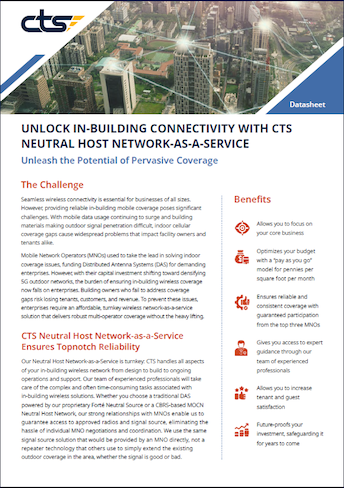
Data Sheet
Learn about the benefits of our Neutral Host Network-as-a-Service
-
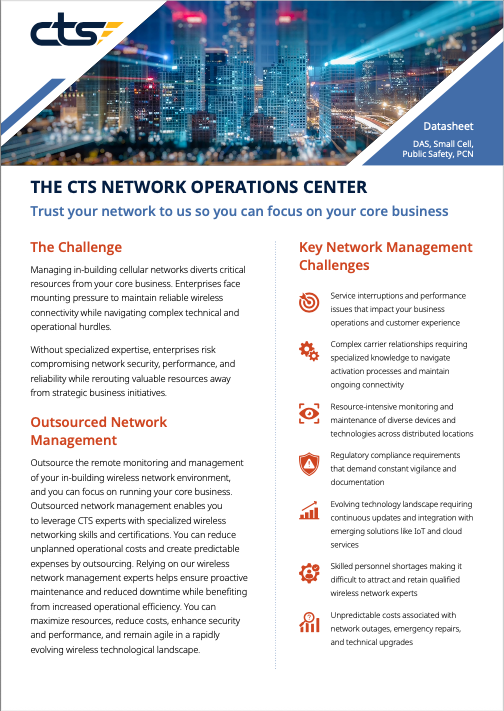
Data Sheet
Learn about the benefits of our Maintenance services and our Network Operations Center
Stadiums and Venues Wireless Connectivity FAQs
-
A Distributed Antenna System, or DAS, is a network of antennas connected to carrier infrastructure that extends cellular coverage and capacity throughout a venue. Stadiums use DAS because outdoor cell towers cannot reliably serve every seat, suite, concourse, tunnel, and back-of-house area during high-density events.
-
A neutral host DAS is shared wireless infrastructure that supports multiple mobile carriers on one system. For venue owners, neutral host DAS reduces the need for separate carrier systems, simplifies coordination, and helps fans receive reliable cellular coverage regardless of which Tier 1 carrier they use.
-
Most jurisdictions require large venues to maintain compliant first responder radio coverage through an Emergency Responder Radio Coverage System, also called Public Safety DAS. Requirements depend on NFPA 72, IFC 510, and local AHJ rules. Venue owners are typically responsible for maintaining compliance.
-
Private 5G gives the venue operator a dedicated cellular network for operational systems. Unlike public cellular service delivered through DAS, private 5G is controlled by the venue and can support team operations, point-of-sale systems, staff devices, cameras, access control, IoT sensors, and other applications that need secure, predictable connectivity.
-
Yes. DAS and Wi-Fi serve different needs. DAS supports public cellular connectivity for fans and carrier users. Wi-Fi supports venue apps, guest access, staff devices, operational systems, and other data use cases. Most large venues need both technologies as part of an integrated wireless strategy.
-
MMRD stands for Monitoring, Maintenance, Repair, and Dispatch. CTS MMRD provides 24/7 NOC monitoring, preventive maintenance, remote diagnostics, repair coordination, and field dispatch for wireless infrastructure. For venues, MMRD helps maintain performance across DAS, Public Safety DAS, private networks, Wi-Fi, and related systems.
-
Yes. CTS can support qualified third-party wireless infrastructure through MMRD after an initial system inspection and operational assessment. This helps venue operators consolidate monitoring, maintenance, repair, and dispatch under one partner, even when the original system was deployed by another provider.
-
CTS supports professional stadiums, college stadiums, arenas, ballparks, motor speedways, convention centers, performing arts venues, and multi-use entertainment complexes. Each venue type has different density, carrier, compliance, and operational requirements, so CTS designs each wireless solution around the site and event model.
Ready to Build the Wireless Foundation Your Venue Needs?
Whether you are planning a new venue, upgrading a legacy DAS, preparing for a major event, improving public safety coverage, adding private 5G for operations, or looking for a managed services partner, CTS can help you design, deploy, and manage the wireless infrastructure your venue depends on.
CTS brings carrier-trusted execution, integrated wireless design, national venue experience, and 24/7 managed operations to support fan connectivity, venue operations, public safety, and long-term performance.